Real Travel Feature

Real Travel Cover

THE LAND THAT TIME FORGOT


His face covered by fabric, the young man was bent double, cord slicing through his palms as he wrestled with the creature beneath the sea. There was a flash of yellow fin as the angry, writhing tuna was hauled above the surface. It was an equal match for him in size and strength and certainly bigger than the width of the boat. Oblivious to this struggle, hundreds if not a thousand dolphins cascaded around the lightweight local fishing boats and our small tourist boat with only three occupants. Here at the crossroads of Europe, Asia and Africa our journey into Oman was generating a rhythm of its own.


Belonging to the Arabian Peninsula, Oman is often overshadowed by its notorious big sister, Saudi Arabia. I had hazy childhood memories of visiting my father there, remembering my mother as a swathe of fluid black fabric who needed a letter to travel anywhere without her husband. With these images in mind I resigned myself to staying within the confines of an all-inclusive hotel for a little rest and relaxation before returning to work after our round the world honeymoon.


Arriving dirty and dishevelled from the ravages of Delhi the soothing warm air and warm seas were just the tonic we needed. I slept, drank, ate and lazed for a couple of days before I began to feel restless. As I walked along the terracotta coloured beach I could see men in traditional dish-dashas playing football in the distance. As I floated in the glassy, clear and gentle sea I could see small sailing boats gliding past a fortress on the horizon. My mind filled with the stories of Scheherazade’s 1001 Arabian nights. I was also growing tired of the kitschly disturbing Eastern European dance duo in shiny plastic cat suits who warbled at me every evening over dinner. It was time to move on. We checked out, hailed a (disconcertingly expensive) taxi and headed into Muscat.


After years of being closed to the world, Oman’s capital is now almost falling over itself to welcome you. Its streets are pristine, its signs translated into English, its people courteous & respectful. Alcohol is viewed as a Western indulgence and is licensed only in international hotels. Ironically this makes it much easier to meet and chat with local Omanis who flock to the hotels to drink wine with their dinner and let their hair down.


A passionate expat, who arrived here from India in the 70s and never left, hands us a battered, yellowed guidebook from the same era. Er, isn’t this likely to be out of date by now, I murmur, while trying to sound gracious. Everyone at the table falls about with laughter. Later, I understand why; it really does feel as though time has stood still and that we must be one of only a handful of travellers to explore this foreign land. Armed with enthusiasm, a hired jeep and a map we hit the road.


Independent driving through Oman is an absolute pleasure and in many ways illustrates the country’s history. Following a bloodless coup against his own reclusive father, Oman’s benevolent Sultan seized the oil jackpot and embraced diplomatic relations and reforms. Protective of its conservative values, Oman has developed its infrastructure cautiously and the drive reveals high gloss, high tech services alongside rural traditions that are centuries old. There are only a handful of roads, meaning that even with my often criticised navigation skills it is almost impossible to get lost. These roads are empty and in immaculate condition, meaning that even with my husband’s often criticised driving skills, it is almost impossible to have an accident.


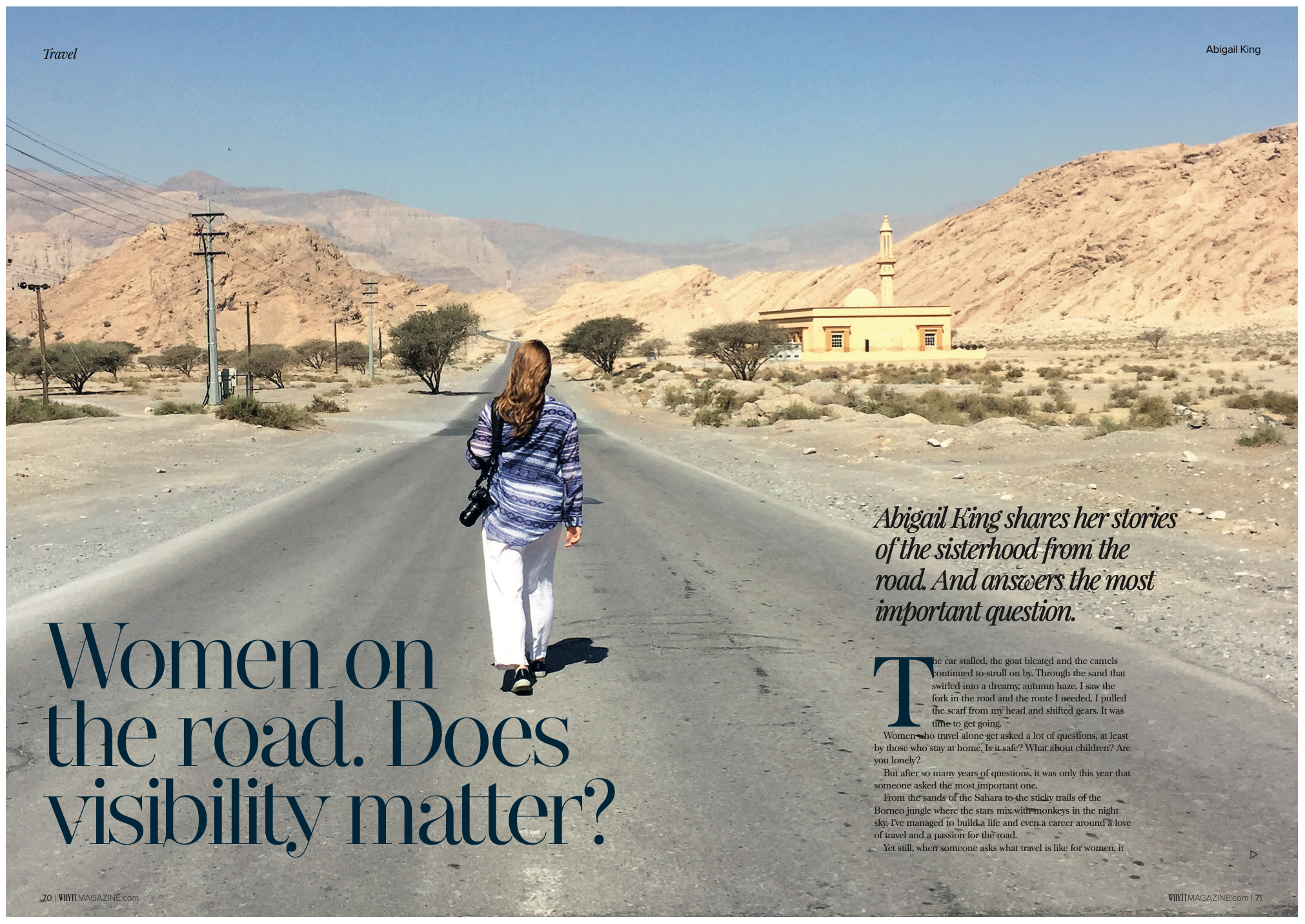
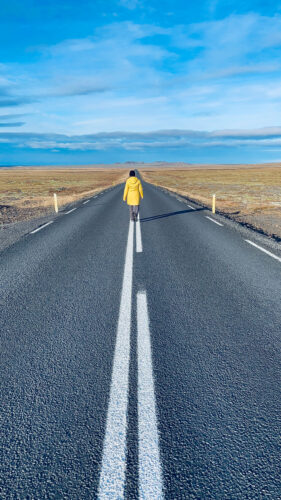
We glide seamlessly along the new ‘black-tops’ with no other traffic in sight and glowing red sand dunes rising up on either side. With the light making dizzying, shimmering patterns on the horizon it is easy to understand how ancient nomads could intoxicate themselves with the delusion of a mirage. Unless, hang on…am I dreaming or is there a camel in the middle of the road?


In fact there are several. Nonchalant, majestic even, they process across the road without a backward glance. Although my eyes scour the area, suspiciously looking for a tourist trap, it seems that we are alone – camels and jeep. They pose for a few photos and we head on.


“IT IS EASY TO UNDERSTAND HOW ANCIENT NOMADS COULD INTOXICATE THEMSELVES WITH THE DELUSIONS OF A MIRAGE”


The drive from Muscat to Sur can be done in four to five hours but we have chosen the longer, more scenic, route along the coast.  The road winds and weaves in harmony with the coastline and provides spectacular views of the creamy, rocky cliffs dipping into sparkling blue sea. Tiwi Beach, meaning ‘white sands’, is completely unspoiled. I wish we had brought our camping gear, as it is possible to spend a night here gazing at the stars.


Even by the coast the air is thick and warm and I am grateful that we have avoided the height of summer. Although liberal for an Islamic country, both sexes are still expected to cover up from wrists to ankles. Mental note: next time I do a trip like this, pay the extra for air-conditioning.


Fortunately we soon arrive at our first real life oasis. Glimmering, crystal water flows through the rocks at Wadi Shab. It is beautiful, tranquil and surrounded by palms and I am almost overcome by the urge to throw myself straight in. Our weathered guidebook told us that it was incredibly offensive to bathe in western swimsuits and that Omani women swam fully clothed. Glancing down at my pale linen clothes I figure that as soon as I hit the water I will resemble a wet T-shirt competition wannabe. So, I wriggle and contort myself in the back of the car to change into something darker. In the sticky heat, it is perhaps an understatement to say that this is not easy.  Mission accomplished, we set up the rocky, uneven path into the deep canyon carved by monsoon rivers centuries ago.


We pass more and more young Omani men and postpone the swim for longer and longer. Eventually we hear shrieks of laughter, turn a bend in the path and see a French family swimming in the water. The women are wearing bikinis and the crowd of local onlookers look anything other than offended. Some things have changed since the 1970s after all.


The water is so clear and cool that it takes my breath away. The swim along the riverbed is exhilarating and I feel that nothing could be more beautiful.


Well, that is until we reach Wadi Bani Khalid further along the coast. It is a public holiday and the locals have also come along to enjoy the spectacular scenery. This oasis is greener, deeper and wider and families dot themselves at the water’s edge and lay out their picnics. They smile at us but otherwise let us be. No one tries to sell us anything. The scramble through the canyon is more demanding here but reaching the isolated pools alive with silver fish makes me feel that the effort was worth it. For the first time I notice that many of the women have covered their heads with colourful, embroidered scarves.


By now I have realised that my black-veil flashbacks were undeserved: in Oman women are unveiled, they travel independently & hold posts within government. That doesn’t mean they are free to dine alone, however. The Omani people have been overwhelmingly friendly yet we drive them to scurrying alarm when we inadvertently walk into the ‘men’s’ section of a roadside restaurant. We are escorted to a screened off ‘family area’ and when I need to go to the toilet it takes a procession of waiters holding screens either side of me to spare the other diners the reminder that women exist.


SINBAD THE SAILOR

We reach the edge of Sur, the legendary starting point for the voyages of Sinbad the Sailor, just as darkness is falling. We pass its magnificent dhow building shipyard and head for Ras al Hadd, the starting point for our voyage into the turtle reserves. Registering for a permit seems easy enough: hand over some money at the hotel. The sting comes in getting up at 3am for the bumpy drive to one of the worlds few nesting grounds for the endangered Green Turtle. We join a tour group and head off across the damp sands, armed with torches. Our guide, a lively wiry Omani with lilting speech, fills us in: it can take up to fifty years for a female to return to her original beach to lay eggs. Both adults and new hatchlings must return to the sea by daybreak in order to escape death at the beaks of the seagulls overhead. Crucially, he cautions, flash photography is forbidden as it disrupts the turtles’ sense of direction.


We spend a long, cold period of time plodding methodically across the sands and just as I feel my enthusiasm wane a cry goes out. He has found a mother nesting and we all cluster around. She is enormous and is rhythmically flicking out sand as she burrows down. Unfortunately many tourists start patting and stroking her and taking photos. Confused, she stops digging and tries to move on.


This disturbing behaviour worsens when we find some babies hatching from their eggs. Smaller than my palm it is incredible to believe these may someday grow into the mighty creature we have just seen. Their chances are small, our guide explains with a shake of his head. Many will die before they reach the sea – by losing their direction or by having their eyes poked out by crabs. And with that the flashes fire furiously from the tourists around us. The babies spin awkwardly and scurry off towards each flashbulb. It’s a deeply unsettling experience. The government is extending access in order to raise the profile of these threatened animals and yet it feels as though our little group has done much more harm than good.


“SPICES AND SMOKE FILL THE AIR AS WE DUCK BENEATH SWORDS, ALADDIN LAMPS AND THE CHARACTERISTIC CURVED DAGGER THAT MEN CARRY”


Our journey moves inland and we rise and fall rhythmically through the rocky, rust coloured Hajar mountains. The air is cooler here and you need to wrap up warm.  Eventually rocks give way to small villages and green terraces growing apricots, walnuts and almonds. Oman once belonged to the spice route between Zanzibar and India and its simple, inexpensive dishes of lamb and tomatoes are infused with a delicate range of flavours that I find delicious.


We plunge off the road into the heart of Wahiba Sands for a spot of ‘dune bashing.’ This involves driving as fast as you can up the crest of a dune and down the other side. It feels like floating on air. The glittering red sands stretch on forever into the distance and the air is silent. Although the camels seem unimpressed by our antics we attract the attention of a passing Bedouin who invites us inside his tent for some strong coffee infused with cardamom and saffron. He asks us to join his tour into the desert but the sun is beginning to set and we have to turn him down.


TRAVEL SAFE

Travelling through Oman feels so safe and peaceful that I struggle to imagine the pounding from canon fire that the ancient capital, Nizwa, withstood. Even the view from its restored fort is tranquil with flat roofed houses nestled between date palms. Nearby, within a day trip of Muscat, the mythical history of Oman is more easily imagined in the preserved and furnished Jabrin Castle, a former home of fifteenth century imams. Steeped in history and the scent of frankincense, locals gather outside to play traditional music while we wander through the reconstructed rooms.


Both Nizwa and Muscat contain mesmerising souqs. Unlike the frenzied atmosphere of Marrakech, the pace here is gentle and refined. Spices and smoke fill the air as we duck beneath swords, gold coloured Aladdin lamps and the characteristic curved dagger, or khanjar, that men carry. The merchants are helpful but not insistent and shopping is a relaxed, enjoyable affair.


We splash out and finish our trip in one of Oman’s exciting new hotels that has won many international awards – The Chedi, Muscat. Lit by flaming urns, its symmetric hallways lead out to stunning infinity pools – its architecture is almost worth a visit in itself. The restaurant, which serves international food, allows you to watch its expert chefs at work and breakfast is a dizzying array of rainbow coloured fruits and delicacies.


Sipping end-of-honeymoon champagne and looking out over the sea I realise why this trip has meant so much to me. It really gave me the feeling of getting off the beaten track, the feeling of being welcomed to a land that few tourists had ever seen before. In this global world, that’s a treasure that is pretty hard to find. If you’re looking for an authentic journey through a country that makes allowances for westerners while maintaining its Arabian soul then pay Oman a visit- just don’t disturb the turtles.


TIPS

1) Deflate tyres slightly before dune-bashing

2) Petrol stations are sparse away from the cities so stock up before setting off

3) Bring wet suit boots to help climb in and out of wadis

4) Credit cards are widely accepted in the big hotels but you will need cash for souks, small hotels and services outside the cities

5) Expect to pay UK prices for most accommodation and transport


INFOBOX


FLIGHTS

Abi flew on a ‘One World’ ticket booked through Trailfinders

Return flights to Muscat from the UK cost around £350


TOUR OPERATORS

Treasure Tours  - treasure@omantel.net.om

Other tour companies are easily found at Seeb Airport and in International Hotels


VISAS

Cost approximately £12 and can be obtained at Seeb International Airport. UK tourists can stay for up to one month and need six months remaining on their passport.


VACCINATIONS

Hepatitis A and B, diphtheria, tetanus and typhoid are recommended. Check up to date requirements prior to travel through www.fco.gov.uk. You may need a certificate if you are arriving from a Yellow Fever area.


ACCOMMODATION

The Chedi Muscat                       reservation@chedimuscat.com

Al Sawadi Beach Resort               alsawadi@alsawadibeach.com

Other hotels booked locally.


DRIVING

You can hire a rental vehicle using either an international or UK licence.

Avis, Budget, Europcar and Hertz can be found in Muscat.


Photographs for this article can be seen here.


Back to Top

Back to Home